

Copyright infringement is using another original work without his or her consent or license. Every copyright owner has an exclusive “bundle of rights.” This means reproducing, distributing, sharing, performing, displaying the work, or making a derivative work from the original.
In cases of copyright infringement, the copyright owner attempts to resolve the dispute by first sending the infringer a cease-and-desist letter. If the dispute is not resolved by a cease-and-desist letter, negotiations, and private settlement, the copyright owner may seek remedies in court.
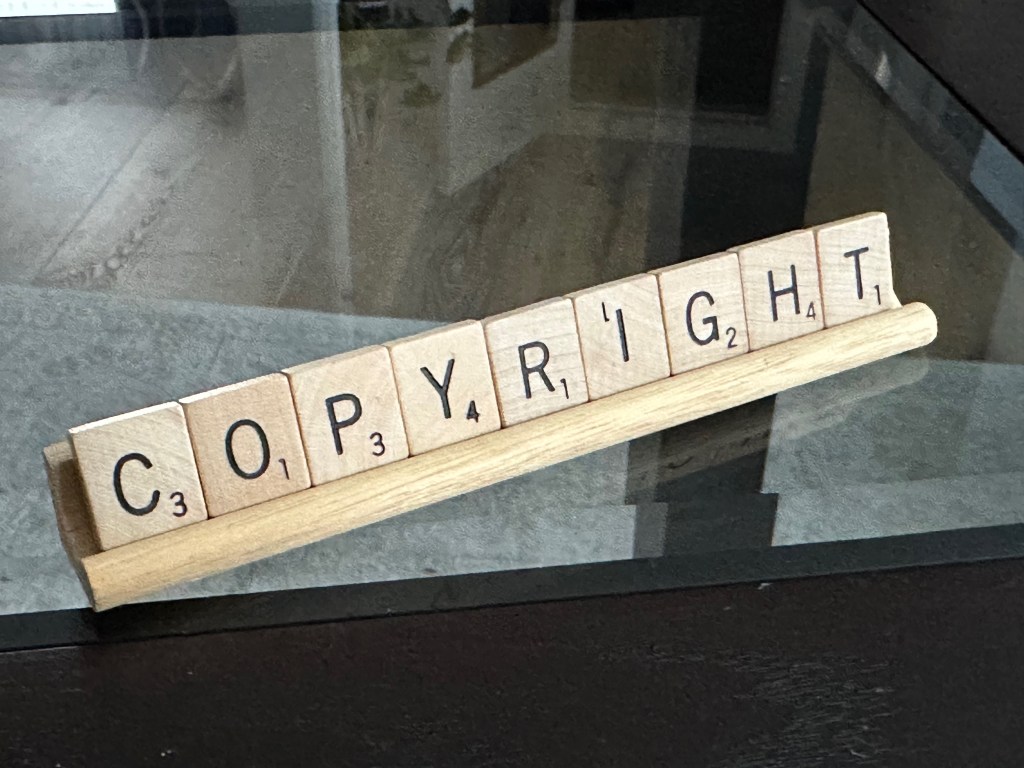
What Copyright Protects
Copyright protects original works of human authorship affixed to a tangible medium. Copyright can protect works ranging from books, choreography, illustrations, music recordings, software, movies.
A “modicum” of creativity involving a “spark” is necessary, so materials such as titles, slogans, common phrases and symbols are generally not protected. Copyright protection does not extend to concepts, ideas, methods, systems, or principles.
Works and Ownership
Works are created by a human author. For companies, an exception called “made for hire” exists for ownership when (1) an employee creates a work during the employee’s regular duties; or (2) a contractor creates a work by commission or express work.
Currently, there is healthy debate regarding the use of artificial intelligence (AI) and copyright, and whether works relying on AI are protectable by copyright. For now, know that courts are reluctant to extend copyright protection to AI-related works because AI lacks human authorship.
Copyright Infringement Damages
Copyright infringement carries with it serious consequences. Motive can be helpful in determining whether infringement was “innocent” or “willful.” For instance, a teacher lifting photographs for a class presentation would likely be an innocent infringer verses a large organization creating a movie derived from a famous book.
Copyright infringement typically involves actual damages; however, if certain requirements are met, statutory damages may be claimed. Statutory damages, per work infringed, for innocent infringement ranges from as low as $200 per work infringed to willful infringement ranging from $750 to $150,000.
Exceptions to Copyright Infringement
There are some exceptions to copyright infringement such as:
- Consent, License, and Permission
- Fair Use (four factor test)
- First Sale Doctrine
- Independent creation
- Limited reproduction by libraries
- Misuse of the copyright
- Originality
- Public Domain
- Safe harbor for online service providers (e.g., Section 230 of the Communications Decency Act of 1996)
- Statute of Limitations
What to Do If You Are Sued For Copyright Infringement
If you are sued for copyright infringement or receive a cease and desist letter, do not ignore it. Begin by carefully reviewing the complaint, docketing the time needed to respond. Next, consulting an attorney experienced in intellectual property law to assess the claims against you.
Avoid making public statements or admitting liability. Gather any relevant evidence, such as proof of original work or permission to use the material, to support your case. Depending on the circumstances, you may consider negotiating a settlement, challenging the validity of the copyright, or asserting a fair use defense. Timely and informed actions can help protect your rights and minimize potential damages.
Conclusion and Recommendation
If you noticed unauthorized use of your work, received a cease-and-desist letter, or are being sued for copyright infringement, taking swift and informed action is critical. Protecting your rights and navigating the complexities of copyright law requires experienced guidance. Contact Syed Law today for personalized legal support. With experience in copyright matters, Syed Law can help you understand your options, defend your rights, and achieve the best possible outcome.
You must be logged in to post a comment.